USDA Rural Development Loan: Eligibility, Benefits, and How to Apply
Zero down payment, a 1% upfront guarantee fee and a 115%-of-county-median income cap — here is how USDA's guaranteed loan works and who it rules out.
By Desmond Achebe-Park · Oct 06, 2026 · 12 min read
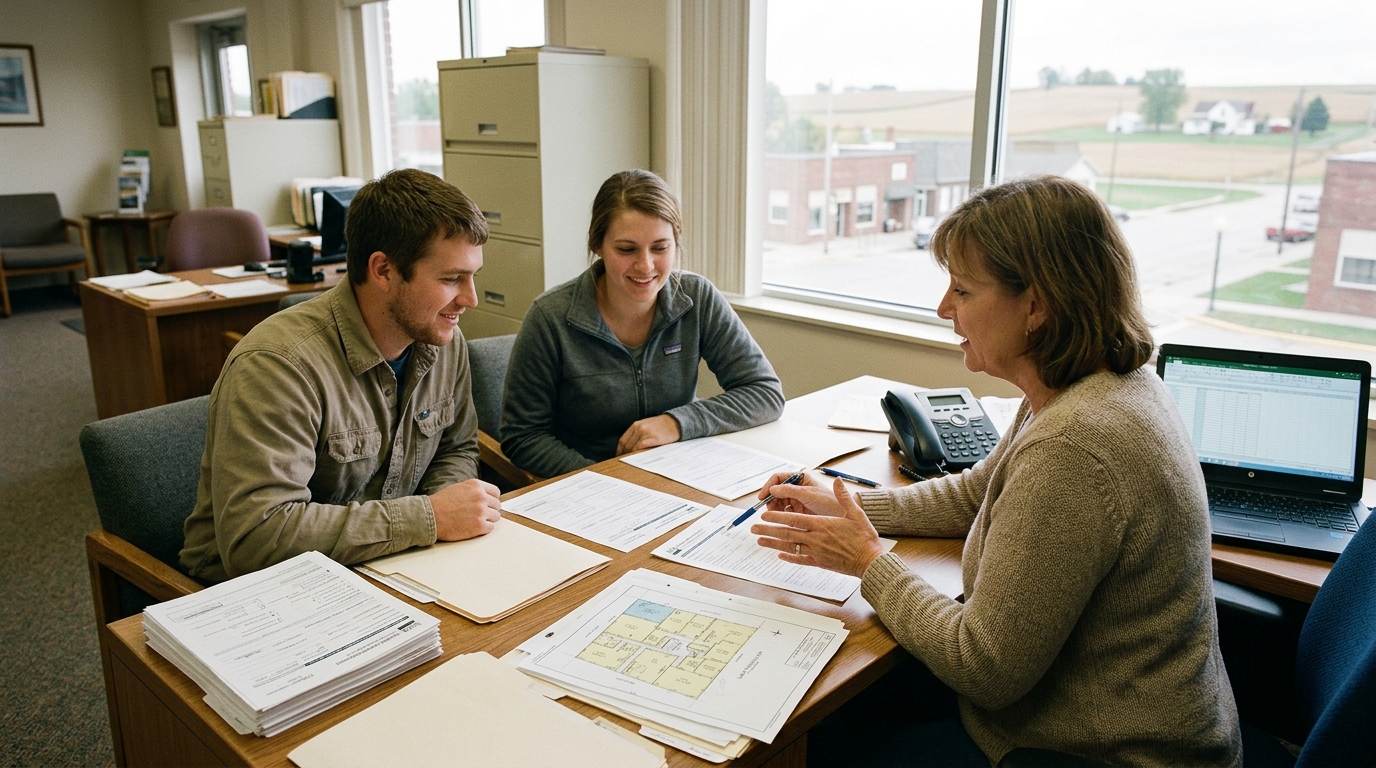
The Single Family Housing Guaranteed Loan Program (SFH-G) lets approved lenders write 100-percent-financed, no-money-down mortgages to low- and moderate-income buyers, backed by a 90-percent loan guarantee from USDA Rural Development (USDA Rural Development, 2024-10). You borrow from a bank or mortgage company, not from USDA, and the government's role is the guarantee behind the loan.
It is not a first-time-buyer program (USDA Rural Development, 2024-10), but it is tightly bounded: the house must be in an eligible area, you must occupy it as your primary residence, and your household income must sit under the local moderate-income limit. Income caps, lender credit overlays, property type rules and appraisal standards all change what you can actually do with it, so check each one against the county you are buying in.
What This Program Covers
The program is the Single Family Housing Guaranteed Loan Program, administered by USDA Rural Development. USDA does not lend you the money. An approved lender funds the mortgage, and USDA Rural Development backs it with a 90-percent loan guarantee, which is what allows the lender to offer 100-percent financing with no money down to eligible low- and moderate-income borrowers (USDA Rural Development, 2024-10). The rules sit in 7 CFR Part 3555 and the SFH-G Handbook (USDA Rural Development, 2024-10) — those are the documents a lender's underwriter is working from, and you can cite them when you get conflicting answers.
What the program covers:
- A fixed, 30-year loan. The interest rate is negotiated between you and the approved lender, and you must work directly with an approved USDA RD lender (USDA Rural Development, 2024-10).
- Purchase financing with no set maximum purchase price and no acreage limit, as long as the acreage is common for the area; the loan size is driven by your repayment ability instead (USDA Rural Development, 2024-10).
- Repeat buyers. The program is not restricted to first-time homebuyers (USDA Rural Development, 2024-10).
- Single family existing homes, new construction, condos, PUDs, modular homes and some manufactured homes. Existing homes must meet the requirements in HUD Handbook 4000.1 (USDA Rural Development, 2020-07).
What it does not cover:
- Anything you will not live in. You must agree to occupy the home as your primary residence (USDA Rural Development, 2024-10) and move in within 60 days of loan closing (USDA Rural Development, 2020-07). Vacation homes and income-producing properties do not qualify (MortgageQuote.com, undated).
- Borrowers who can already get conventional financing with no private mortgage insurance. Being unable to obtain that loan is itself an eligibility condition (USDA Rural Development, 2024-10).
- Free financing. There is an upfront guarantee fee of 1.00%, a technology fee of $25, and an annual fee of 0.35% of the unpaid principal balance (USDA Rural Development, 2020-07). The annual fee is collected through your monthly payment, so a zero-down loan is not a zero-cost loan.
Whether a given address is in an eligible rural area is a property-by-property question, decided by USDA Rural Development's published eligibility maps for that county — a home two miles away can fall outside the boundary.
Eligibility Requirements
| Criterion | Requirement | Source |
|---|---|---|
| Household income cap | Annual income of all adult household members must be below the Moderate limit — 115% of county median household income. Deductions: $480 per eligible dependent, $400 for an elderly household | USDA Rural Development, 2020-07 |
| Income cap, worked example | Birmingham-Hoover, AL HUD Metro FMR Area, FY2026: $122,800 for 1-4 person households, $162,100 for 5-8 person households | USDA Rural Development, 2026 |
| Credit score | No minimum published by Rural Development; the lender determines creditworthiness, and most lenders require a FICO score of 640 or higher. A GUS "Accept" needs no credit score validation; "Refer" or "Refer with Caution" requires validation plus at least one applicant with two tradelines with a 12-month history | USDA Rural Development, undated; The Mortgage Reports, undated; USDA Rural Development, 2020-07 |
| Down payment | 0% — loans are 100-percent financed | USDA Rural Development, 2024-10 |
| Debt ratios | 29% for PITI and 41% for total debt, with flexibility for compensating factors | USDA Rural Development, 2020-07 |
| Occupancy | Primary residence only; occupy within 60 days of loan closing | USDA Rural Development, 2024-10; 2020-07 |
| Conventional-credit test | Applicant must be unable to get conventional financing with no private mortgage insurance | USDA Rural Development, 2024-10 |
| Eligible property types | Single family existing, new construction, condos, PUDs, modular, some manufactured; existing homes must meet HUD Handbook 4000.1 | USDA Rural Development, 2020-07 |
| Purchase price / acreage | No set maximum purchase price; no acreage limit if acreage is common for the area | USDA Rural Development, 2024-10 |
| First-time buyer status | Not required | USDA Rural Development, 2024-10 |
Income limits are set county by county and household size by household size, so the Birmingham-Hoover figures above tell you the shape of the rule, not your number. Ask your lender to pull the current limit for the exact county and household size on your application. Condo and PUD purchases add a second layer: the HOA's budget, insurance and owner-occupancy makeup can affect whether the project clears underwriting even when you do.
How to Apply
- Check the property address against USDA Rural Development's published property eligibility map for the county, and check your household size against the county's current Guaranteed Loan moderate income limit — 115% of county median household income (USDA Rural Development, 2020-07). Do this before you write an offer, not after.
- Total the annual income of every adult in the household, then subtract $480 per eligible dependent and $400 if the household is elderly (USDA Rural Development, 2020-07). This is household income, not just borrower income, so a working adult child counts.
- Pick an approved USDA RD lender — you must work directly with one, and the fixed 30-year rate is negotiated between you and that lender (USDA Rural Development, 2024-10). Ask two specific questions: do you run the Guaranteed Underwriting System (GUS), and what minimum FICO score do you apply? Most lenders set 640 or higher even though Rural Development publishes none (The Mortgage Reports, undated; USDA Rural Development, undated).
- Submit Form 1003, the Uniform Residential Loan Application, to that lender with: W-2s for the past two years, your most recent pay stubs, two months of bank statements for every account, federal tax returns, photo ID, Social Security documentation, a signed gift letter for any gift funds, and birth or dependency documentation for each dependent you are claiming as a deduction.
- The lender runs your file through GUS. An "Accept" means no credit score validation is required; a "Refer" or "Refer with Caution" sends the file to manual underwriting and requires credit score validation plus at least one applicant with two tradelines carrying a 12-month history (USDA Rural Development, 2020-07). Expect questions on ratios against the 29% PITI and 41% total-debt benchmarks (USDA Rural Development, 2020-07).
- Negotiate the purchase contract knowing seller and interested-party contributions are allowable up to 6% of the sales price, with no limit on gift funds (USDA Rural Development, 2020-07). Those contributions can cover closing costs and the upfront guarantee fee.
- The lender orders the appraisal. An existing home must meet HUD Handbook 4000.1 requirements (USDA Rural Development, 2020-07); read the appraisal report for required repairs and get them negotiated into the contract or completed before closing.
- Review the Loan Estimate the lender issues after your 1003, then the Closing Disclosure before signing. Confirm three line items: the 1.00% upfront guarantee fee, the $25 technology fee, and the 0.35% annual fee shown in your monthly payment (USDA Rural Development, 2020-07).
- The lender submits the guarantee request to USDA Rural Development and closes once the agency issues its commitment. Sign with the closing or escrow agent, then move in within 60 days of closing (USDA Rural Development, 2020-07).
How It Compares to Other Programs
| Criterion | USDA SFH-G | FHA | Conventional with no PMI |
|---|---|---|---|
| Minimum down payment | 0% — 100-percent financed (USDA Rural Development, 2024-10) | 3.5% with a FICO score of 580 or above; 10% for scores of 500-579 (FHA.com, undated) | Enough equity that the lender charges no PMI. If you can get this loan, you are not eligible for SFH-G (USDA Rural Development, 2024-10) |
| Mortgage insurance / fees | No PMI; instead a 1.00% upfront guarantee fee, a $25 technology fee and a 0.35% annual fee on the unpaid principal balance (USDA Rural Development, 2020-07) | Upfront premium of 1.75% of the loan amount plus an annual premium, most commonly 0.55%; with less than 10% down the annual premium lasts the life of the loan (AmeriSave, 2026) | None by definition — the absence of PMI is what defines this option and what disqualifies you from SFH-G (USDA Rural Development, 2024-10) |
| Household income cap | 115% of county median household income, all adult household members counted; $122,800 for 1-4 person households in Birmingham-Hoover, AL, FY2026 (USDA Rural Development, 2020-07; 2026) | No income cap appears in FHA's published down payment and qualification rules; eligibility turns on credit score and repayment ability (FHA.com, undated) | No income test. The USDA test is availability of the loan, not your income (USDA Rural Development, 2024-10) |
| Credit score rule | None published by Rural Development; lenders set their own, most at 640 FICO or higher (USDA Rural Development, undated; The Mortgage Reports, undated) | 580 for the 3.5% down payment, 500-579 with 10% down (FHA.com, undated) | Set entirely by the lender and investor |
| Property / occupancy | Primary residence only, occupied within 60 days of closing; no vacation or income-producing property (USDA Rural Development, 2020-07; MortgageQuote.com, undated) | Governed by HUD Handbook 4000.1 standards, which USDA also applies to existing homes (USDA Rural Development, 2020-07) | Set by the lender and investor guidelines |
The practical trade-off: FHA's 1.75% upfront premium plus a 0.55% annual premium that can run for the life of the loan (AmeriSave, 2026) is heavier than USDA's 1.00% upfront and 0.35% annual fee (USDA Rural Development, 2020-07) — but FHA has no 115%-of-county-median income ceiling and no rural-area boundary. If your income is over the county limit, or the address falls outside the eligible map, the comparison ends there.
Run both options as actual Loan Estimates from the same lender on the same property. Rates on a USDA loan are negotiated between you and the approved lender (USDA Rural Development, 2024-10), so no table can tell you which payment is lower in your case. A loan officer, and for title or tax questions an attorney or tax professional, should check your specific file.
Frequently asked questions
Can I combine a USDA loan with seller concessions or gift money?
Yes. Seller and other interested-party contributions are allowable up to 6% of the sales price, and there is no limit on gift funds (USDA Rural Development, 2020-07). Because the loan is 100-percent financed (USDA Rural Development, 2024-10), those contributions typically go toward closing costs and the 1.00% upfront guarantee fee rather than a down payment. Down payment assistance programs are run by state and local agencies with their own rules, so ask your approved USDA RD lender whether a specific program is permitted under 7 CFR Part 3555 before you count on it.
Do I have to repay anything to USDA if I sell the house early?
The guaranteed program is a private lender's mortgage with a 90-percent USDA Rural Development guarantee behind it (USDA Rural Development, 2024-10), not a subsidized direct loan. The costs you pay are the 1.00% upfront guarantee fee at closing, the $25 technology fee, and the 0.35% annual fee charged on the unpaid principal balance while the loan is outstanding (USDA Rural Development, 2020-07) — the annual fee simply stops when the loan is paid off. The separate USDA direct loan program has its own subsidy rules, so confirm which program you are in, in writing, before closing.
My credit score is 610. Is that automatically a no?
Not from USDA. Rural Development does not publish a minimum credit score, and it is the lender's responsibility to determine creditworthiness (USDA Rural Development, undated). But most lenders require a FICO score of 640 or higher (The Mortgage Reports, undated), and that overlay is theirs to set — a different approved lender may underwrite differently. If GUS returns a "Refer" or "Refer with Caution," the file needs credit score validation and at least one applicant with two tradelines showing a 12-month history (USDA Rural Development, 2020-07).
Can I rent out part of the home or buy a duplex?
No. You must agree to occupy the home as your primary residence (USDA Rural Development, 2024-10) and move in within 60 days of loan closing (USDA Rural Development, 2020-07). Vacation homes and income-producing properties do not qualify (MortgageQuote.com, undated). Eligible property types are single family existing and new construction, condos, PUDs, modular and some manufactured homes (USDA Rural Development, 2020-07).
Is there a maximum purchase price or lot size?
There is no set maximum purchase price and no acreage limit, provided the acreage is considered common for the area; the loan amount is driven by your repayment ability instead (USDA Rural Development, 2024-10). In practice your ceiling comes from the ratio benchmarks — 29% for PITI and 41% for total debt, with flexibility where compensating factors exist (USDA Rural Development, 2020-07) — and from the appraisal, since an existing home must meet HUD Handbook 4000.1 requirements (USDA Rural Development, 2020-07).
Does my adult roommate's or parent's income count against the limit?
If they are an adult member of the household, yes. The cap applies to the annual income of all adult household members, not just the people signing the note, and must fall below 115% of county median household income (USDA Rural Development, 2020-07). You can deduct $480 per eligible dependent and $400 for an elderly household (USDA Rural Development, 2020-07). For scale, the FY2026 moderate limit in the Birmingham-Hoover, AL HUD Metro FMR Area is $122,800 for 1-4 person households and $162,100 for 5-8 person households (USDA Rural Development, 2026); your county's figure will differ.
Sources
- USDA Rural Development — Single Family Housing Guaranteed Loan Program (Fact Sheet) (2024-10)
- USDA Rural Development — Single Family Housing Guaranteed Loan Program Flyer (2020-07)
- USDA Rural Development — Guaranteed Housing Program Income Limits (HB-1-3555, Appendix 5) (2026)
- USDA Rural Development — Single Family Housing Guaranteed Loan Program 1 Credit Analysis
- MortgageQuote.com — USDA Loan Eligibility Requirements
- The Mortgage Reports — USDA Loan Requirements: Guide for First-Time Home Buyers
- FHA.com — FHA Home Loan Down Payments
- AmeriSave — FHA Loan Requirements in 2026: Credit Scores, Down Payments, and the Full Cost of Approval (2026)

Written by
Desmond Achebe-Park
Desmond covers the renter's side of the market, from lease fine print to the etiquette of negotiating with landlords. He's interested in how small cities absorb people priced out of bigger ones. He writes with a skeptic's eye toward anything called a 'luxury amenity.'